
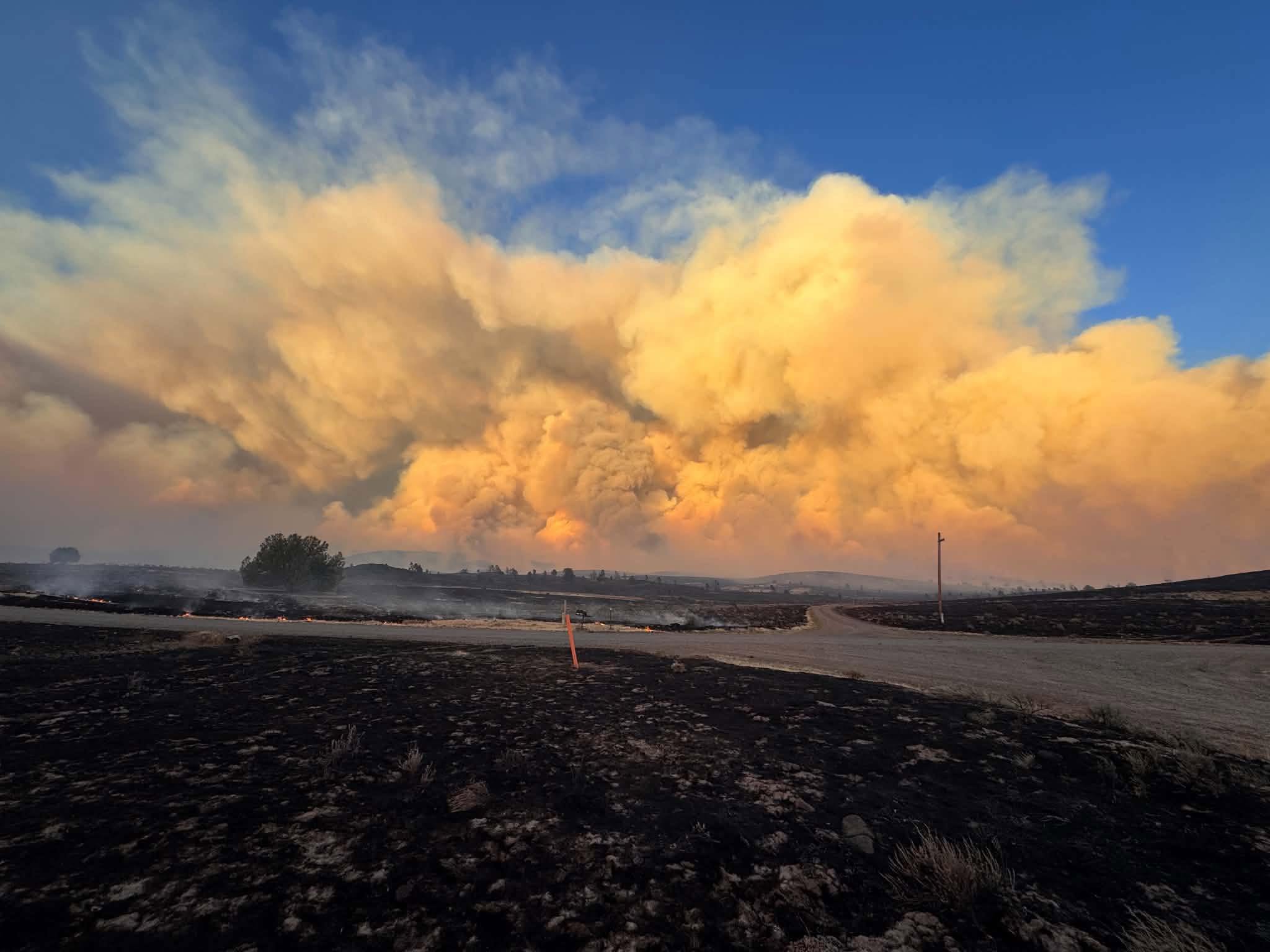
The Big Grass Fire has ravaged over 300,000 acres from Oregon to Idaho, leaving ranchers like Silas Skinner grappling with burned rangeland and scattered cattle
Cattle grazing on the open rangeland of the West is a familiar sight. Herds move across the landscape, feeding on the grass that sustains them.
But for ranchers in and around Jordan Valley, every burned acre means less grass to feed their herds.
The blackened ground won't recover overnight, forcing many ranchers to buy expensive hay months earlier than usual while they wait for the rangeland to recover.
The Big Grass Fire started in eastern Oregon before jumping the Owyhee River into Idaho. The flames scorched more than 300,000 acres, leaving behind burned hillsides, damaged fences and thousands of acres of lost grazing land.
Ranchers scrambled to protect homes, build fire lines and save the livestock depending on the land.
For Silas Skinner, a sixth-generation Jordan Valley rancher, the fight is far from over.
“It’s amazing it did what it did,” Skinner said. “Fire is a very destructive, evil thing.”
Skinner is also the president of the Rangeland Fire Protection Association, a volunteer group made up of more than 100 local ranchers who help fight wildfires across the region.
He watched the fire grow from roughly 60,000 acres in Oregon to more than 300,000 acres after crossing into Idaho. At times, he said, the flames moved quickly, jumping roads, rivers and dozer lines.
“We put in one fire line on this whole thing that actually worked,” Skinner said, adding how stopping the fire often felt impossible.
“Nothing works… can’t stop it,” he said.
The Skinner family has ranched this country for generations, Skinner is a sixth generation and his grandson is the eighth.
Now, the land that once provided food for his cattle is quiet, charred and changed.
Skinner said he used to look out and see the mountains “clear as a bell.” Now, he says, much of what he sees for miles has been burned.
“There’s an old myth around here: South Mountain will never burn,” Skinner said. “It hadn’t burned in 100 years that anybody knows of… but it got most of it this year.”
The sagebrush and timber that covered the hillsides is now gone in many areas.
The fire left behind damaged fences and a future filled with uncertainty. Grass that was supposed to feed cattle for months disappeared overnight.
“There’ll be years till we can graze this again,” Skinner said.
Ranchers who normally keep cattle on rangeland into the fall are now moving herds to unburned ground or feeding hay earlier than expected.
“We’re probably talking 10, 12,000 head of cows that are going to have to be relocated for two to three years,” Skinner said. Pasture costs are already increasing, and replacing lost cattle can cost thousands of dollars per animal, Skinner said.
For his own operation, Skinner is still searching for hundreds of lost cattle. About 300, he estimated.
He believes many are still alive, scattered across the rugged country. “Could there be some [dead]? Yes. But I haven’t found them yet,” Skinner said.
But for Skinner, the loss is more than acreage or money.
“That really hits home when you’re putting your photo album in your pickup to try to save it,” he said. “It’s pretty tough to see.”
After years of raising and caring for his herd, Skinner says the cattle are not just livestock.
“You kind of get to know your cows,” he said. “It’s a hard thing to have to put down an animal that is your life.”
Article Image Credit: Big Grass Fire Facebook Page