
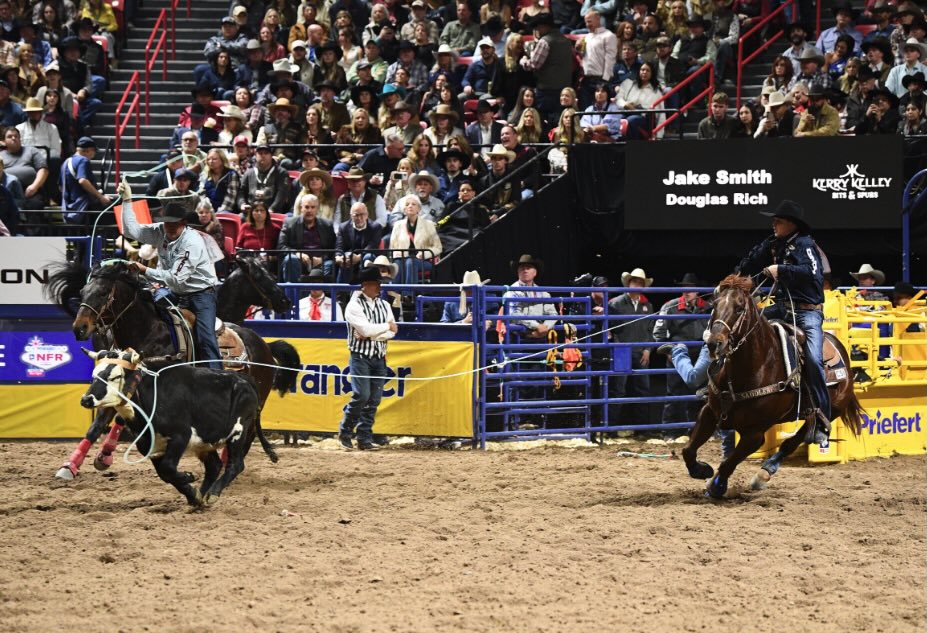
While the world's top 15 headers and heelers continue their race toward qualifying for the 2026 Wrangler National Finals Rodeo, another race is taking place behind the scenes: assembling a consistent set of cattle for rodeo's biggest stage.
The 2026 NFR is expected to rely primarily on a carefully assembled set of native Corriente cattle, marking what could become one of the most notable changes to the event in recent history.
The change comes despite the scheduled reopening of the Douglas, Arizona, Port of Entry to Mexican cattle on Aug. 24.
This years team roping will feature 80 head of steers instead of the traditional 60, after receiving approval from the Professional Rodeo Cowboys Association.
The additional cattle are intended to improve consistency throughout the ten-round championship. Rather than dividing 60 steers into three pens, requiring one pen to be used four times, the expanded herd allows organizers to create four complete pens.
The goal is simple: every pen will be used the same number of times.
Consistency has long been considered one of the most important factors in producing a fair Wrangler National Finals Rodeo team roping.
While fans often focus on the contestants competing for world championships, the cattle themselves play an equally important role in determining the outcome. Every steer must provide a consistent opportunity, ensuring championships are decided by horsemanship and roping ability rather than the luck of the draw.
If the current timeline holds, December's Wrangler National Finals Rodeo will showcase not only the sport's best team ropers but also a historic transition in the cattle behind the barrier.
For the first time in years, native steers are expected to take center stage, demonstrating how the effects of the New World screwworm response continue to reshape every corner of the rodeo industry.
The anticipated changes also underscore how interconnected the livestock and rodeo industries have become. Decisions made at the international border are now influencing everything from cattle availability and market prices to the livestock selected for the sport's most prestigious championship. While competitors will still be competing for gold buckles and world titles under the bright lights of Las Vegas, the cattle behind the barrier will tell a story of resilience and adaptation. Contractors, livestock producers, and rodeo officials have spent months preparing for a scenario few imagined a year ago, ensuring that the integrity of the National Finals Rodeo remains unchanged despite unprecedented challenges facing the industry.