
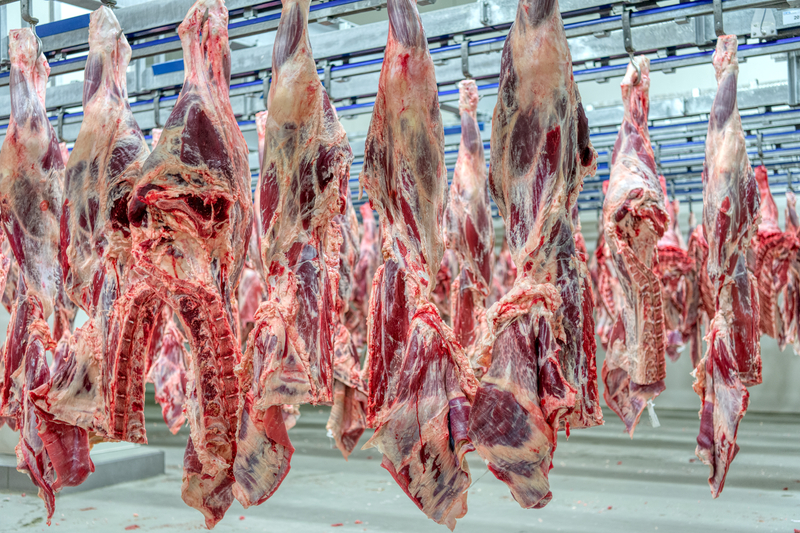
JBS will continue buying cattle in Pennsylvania despite closing its largest slaughter plant in the state.
Still, beef industry members expect the planned Aug. 14 closure of the Souderton plant will hurt farmers’ profits.
JBS spokesperson Nikki Richardson said the company plans to continue using cattle buyers and to remain a consistent participant in the local market.
A JBS facility in Memphis, Tennessee, is also being closed, and Richardson said the changes are being made for efficiency.
“We remain committed to maintaining strong, consistent procurement programs, and supporting long-term relationships across our supply chain,” she said.
JBS purchased many of the fat cattle for its Souderton plant from buying stations and auctions, along with independent feedlot/finishing operations.
The plant has capacity for about 2,000 cattle per day. The production will be absorbed by other JBS plants, such as one in Plainwell, Michigan.
Bill Devore, president of the executive committee of the Pennsylvania Cattlemen’s Association, expects the closure will have a ripple effect across the area’s beef industry.
Small beef producers may see it in reduced prices at auction or the buying station.
“The good part is they’re not closing their buying stations,” he said.
That point was confirmed by Jonathan Good, vice president of Goods Cattle Brokerage in Denver, Pennsylvania.
He said Pennsylvania buying stations will remain open to purchase cattle from farmers for JBS.
“Goods Cattle Brokerage will continue buying baby calves and assisting JBS in purchasing cattle,” Good said.
What will change, Devore said, is the cost of hauling cattle all the way to Michigan instead of to the Philadelphia suburbs.
He estimated the additional shipping could cost beef producers 10 to 15 cents per hundredweight.
“JBS isn’t going to eat the shipping costs. It’s going to be us with the fat cattle who need to get them there,” Devore said.
Once the JBS location closes, the Northeastern U.S. will have only one beef slaughter plant that USDA classifies as large.
The Cargill plant in Wyalusing, Pennsylvania, has a capacity of approximately 1,500 cattle.
The Northeast is also served by Nicholas Meat of Loganton, Pennsylvania, which has a capacity of 1,000 head, and a number of large butcher shops that USDA classifies as small meat processors.
In a June 14 statement, the Virginia Cattlemen’s Association said it’s disappointed in the closure of the JBS plant.
“The loss of significant East Coast harvest capacity is a blow to cattle producers in a region of the country that already has limited processing options,” the release said.
Devore said it’s possible beef processing plants could close elsewhere in the nation as hook space, or overall capacity, exceeds the number of fat cattle in the U.S.
The low inventory of fat cattle partly contributed to the Souderton plant closure, he said, along with the fact it is an older, outdated facility.
There is also talk of JBS selling the Souderton facility to another processor.
Richardson said right now the company is focusing on shutting down the plant and supporting workers, but it is evaluating options and is open to a potential sale.
On a positive note, Devore said, cattle prices at New Holland Sales Stables didn’t take a major hit after the JBS news.
And cattle prices remain high, which could insulate buyers and producers somewhat if hauling costs increase.
If prices were down to around the $2 per hundredweight range, Devore said the JBS decision could have been devastating.
“I don’t think JBS is going to back down from buying. It’s just the shipping cost to get those cattle to Michigan, and someone’s going to have to pay for that,” Devore said. “It’s going to trickle down, right down to the small cow-calf producer, because everyone’s going to have to pay for it in some form.”